


Beyond the Screen: How Rebuilding Real-World Connections Heals Teen Boys Struggling with Porn Addiction

In his landmark book The Anxious Generation, social psychologist Jonathan Haidt puts his finger on a profound truth about modern adolescence: virtual addictions thrive in disembodied, solitary environments.
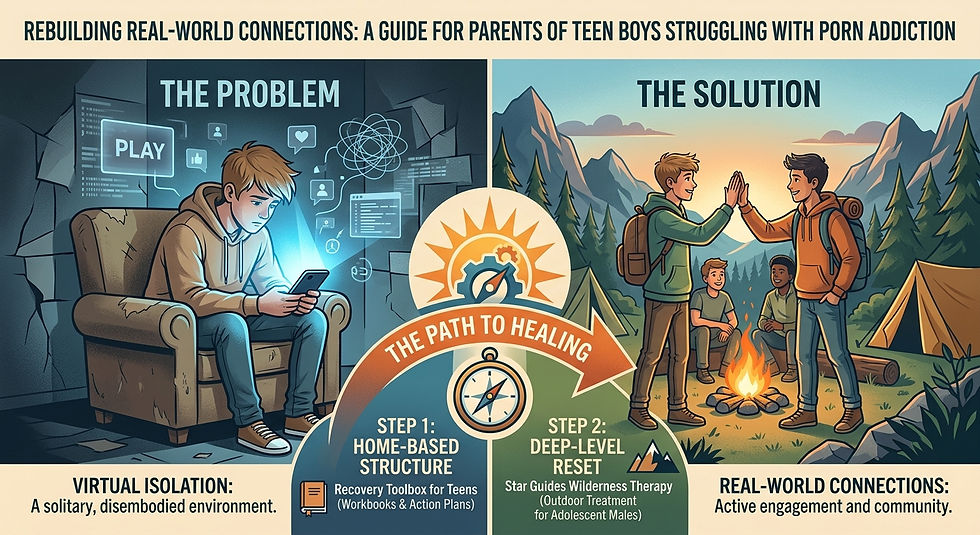
When a teen boy retreats into his bedroom, stares into a glowing screen, and compulsively views pornography, he isn't just seeking dopamine. He is escaping into a world where everything is easy, frictionless, and completely within his control. But this digital isolation comes at a massive cost. It starves his brain of real-world human connection, physical effort, and authentic relationship skills—creating a feedback loop where the more isolated he feels, the deeper he retreats.
If your son is struggling with compulsive pornography use, willpower alone won't break the cycle. Simply taking away his phone leaves a massive emotional vacuum. To truly help him heal, we must fill that vacuum with real-world connection, structured routines, and tangible, hands-on experiences.
Here is how you can help your son transition out of the solitary digital world and step back into real life—along with two proven, evidence-based resources to guide your family.
1. Ditch the Shame, Focus on the Brain
When parents discover a pornography issue, the natural reaction is often fear, anger, or shame. However, framing pornography addiction as a moral failure usually drives boys deeper into secrecy.
Instead, view it through the lens of neurobiology. High-dopamine digital triggers rewire a developing adolescent brain to expect effortless rewards. When he is away from screens, his natural baseline dopamine drops, leading to irritability, anxiety, and deep boredom.
To help his brain recalibrate, he needs structured routines that replace "cheap dopamine" (screens) with "slow dopamine" (physical effort, face-to-face social bonds, and tangible accomplishments).
2. Practical, Home-Based Healing: The Recovery Toolbox for Teens
For many families, recovery begins at home with actionable, clinical tools designed specifically for adolescent boys. A top evidence-based resource for this step is The Recovery Toolbox for Teens.
Developed by clinical experts specializing in adolescent sexual behavior and addiction, this dynamic three-workbook bundle bridges cognitive-behavioral principles with practical, family-centered tools:
The Breaking Free Workbook: Helps teen boys identify their specific triggers, map out their emotional patterns, and understand why they turn to screens when feeling stressed or lonely.
101 Tips for Quitting Porn: Offers bite-sized, actionable strategies to manage urges in the moment, build healthy daily habits, and replace screen time with active, real-world hobbies.
The Parents Workbook: Equips mothers and fathers to support their son without triggering defensiveness. It includes communication tools, transparency trackers, and boundary-setting frameworks so the entire home environment supports recovery.
The Recovery Toolbox for Teens turns vague promises like "I'll do better" into structured daily habits, giving your son tangible "weapons" to fight a daily physical battle.
3. Deep-Level Recalibration: Star Guides Wilderness Therapy
Sometimes, despite a family's best efforts at home, the digital environment and local triggers are simply too pervasive. When a teen boy is deeply entrenched in compulsive pornography or cyber-sexual behavior, an immediate, total reset is required.
This is where Star Guides Wilderness Therapy provides a unique, highly specialized solution.
Located in the high desert of Southern Utah, Star Guides is a Joint Commission-accredited outdoor program built specifically to treat adolescent males struggling with compulsive sexual behavior and technology addiction. Unlike broad behavioral programs, Star Guides focuses explicitly on this issue in a shame-free, therapeutic setting.
Here is how Star Guides directly targets the root causes highlighted by Jonathan Haidt and addiction experts:
Complete Digital Unplugging: By stepping into the wilderness, boys are immediately removed from screens, algorithms, and isolation. This total pause allows their central nervous system to reset.
Embodied, Physical Reality: In the wilderness, life becomes tangible again. Teens hike, set up camp, cook meals over fire, and master primitive survival skills. These activities trigger natural, long-lasting dopamine through real effort and physical accomplishment.
Relational Healing in Small Groups: In small, single-sex peer groups, boys learn to form genuine, face-to-face friendships grounded in vulnerability and mutual accountability rather than online performance.
Specialized Clinical Oversight: Licensed psychotherapists specializing in adolescent trauma and sexual addiction conduct intensive individual and group therapy right in the field.
By stripping away the disembodied noise of the digital world, Star Guides helps young men rediscover who they are, build true self-reliance, and form healthy relational boundaries.
Reclaiming Your Son's Real World
Anonymity and isolation fuel digital addictions. Healing happens out in the open—in shared family conversations, physical activity, real-world responsibilities, and genuine human connection.
Whether your family starts by implementing the structured exercises in The Recovery Toolbox for Teens at home, or requires the immersive, life-changing therapeutic environment of Star Guides Wilderness Therapy, remember that recovery is entirely possible. Your son isn't broken; his brain is simply caught in a digital trap. With the right structure, guidance, and real-world connection, he can break free and build a healthy, grounded future.


Comments