


Reclaiming Focus: How to Navigate Teen Digital Distraction and Pornography Addiction

The digital world has reshaped how teens pay attention. For parents, this shift is more than just a distraction issue. It affects how their children’s brains work, making it harder for teens to focus deeply on anything, including school, hobbies, and relationships. When combined with struggles like pornography addiction, the challenge grows even more complex. Understanding the brain science behind these changes can help parents support their teens better and find practical ways to regain control over attention and behavior.

How Digital Stimulation Changes the Teen Brain
Teens today grow up with constant digital stimulation. Notifications, videos, games, and social media create a flood of quick, intense rewards for their brains. This environment trains the brain to expect fast, frequent hits of dopamine, the chemical linked to pleasure and motivation.
Shortened attention spans happen because the brain adapts to rapid switching between tasks and stimuli.
Reduced ability to focus deeply develops as the brain’s reward system favors immediate gratification over sustained effort.
Increased impulsivity occurs as teens seek out new digital content to satisfy cravings for stimulation.
This neurological shift is not just about distraction. It rewires how teens process information and manage self-control. The brain’s prefrontal cortex, responsible for planning and impulse control, is still developing during adolescence. Digital overload can delay or disrupt this development, making it harder for teens to resist compulsive behaviors, including pornography use.
Why Pornography Addiction and Digital Distraction Often Go Hand in Hand
Pornography addiction in teens often thrives in the same digital environment that fragments attention. The brain’s reward system reacts strongly to sexual content, releasing dopamine in ways that can create compulsive patterns.
Pornography offers intense, immediate rewards that can overshadow other activities.
Frequent exposure rewires reward pathways, making natural rewards like social interaction or academic success feel less satisfying.
Digital distraction reduces the ability to self-regulate, increasing vulnerability to addictive behaviors.
Parents may notice their teens struggling to focus on homework or family time, while also showing signs of secretive or compulsive pornography use. Both issues reflect a brain overwhelmed by digital stimulation and struggling to maintain control.
Signs Parents Can Watch For
Recognizing the signs of digital distraction and pornography addiction early can help parents intervene before problems worsen.
Signs of Digital Distraction
Difficulty completing tasks or homework
Constant switching between apps or devices
Complaints of boredom or restlessness without digital stimulation
Trouble following conversations or instructions
Signs of Pornography Addiction
Spending excessive time viewing sexual content online
Hiding screen activity or becoming defensive about device use
Declining interest in offline social activities or hobbies
Mood changes such as irritability or withdrawal when unable to access pornography
Practical Strategies to Help Teens Reclaim Focus
Parents can support their teens by creating an environment and habits that strengthen cognitive control and reduce compulsive digital use.
Set Clear Boundaries Around Screen Time
Establish specific times for device use and offline activities.
Use parental controls or apps to limit access to certain content.
Encourage tech-free zones, such as during meals or before bedtime.
Promote Activities That Build Attention and Self-Control
Encourage hobbies that require sustained focus, like reading, sports, or music.
Practice mindfulness or meditation exercises together to improve concentration.
Support regular physical activity, which benefits brain health and impulse control.
Foster Open Communication About Digital Challenges
Talk openly about the effects of digital stimulation on the brain.
Discuss pornography honestly, emphasizing respect and healthy relationships.
Create a safe space for teens to share struggles without judgment.
Model Healthy Digital Habits
Limit your own screen time and demonstrate balanced device use.
Engage in family activities that do not involve screens.
Show how to use technology purposefully rather than habitually.
When to Seek Professional Help
If digital distraction or pornography use severely impacts your teen’s daily life, school performance, or emotional well-being, professional support may be necessary.
Supporting Teens with Professional Help
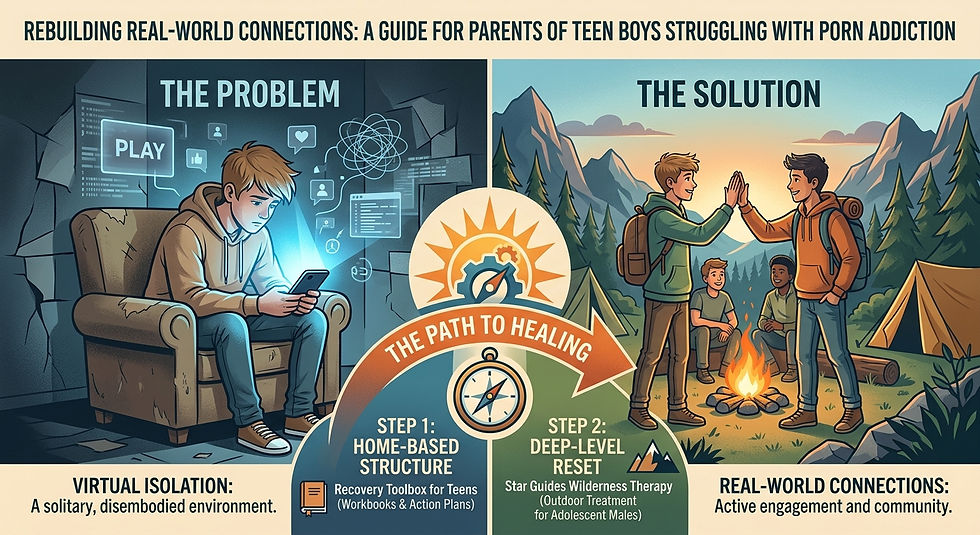
If pornography use is causing significant distress or interfering with daily life, consider consulting a counselor or therapist experienced in adolescent addiction. Early intervention can prevent long-term problems. If your teen struggles with severe addiction or emotional distress, consider professional help. Therapists specializing in adolescent addiction can provide tailored strategies and counseling. Use the Recovery Toolbox for Teens, a comprehensive, structured program designed to deliver evidence-based treatment while offering meaningful guidance and support for both your adolescent and you as a parent throughout the recovery process.
In cases where serious safety risks or unmanageable behavioral issues are present—such as sexually acting out or having experienced sexual abuse, engagement in high-risk online behaviors, severe mental health crises (including suicidality, self-harm, debilitating anxiety, or depression), or when a teen has become entirely unresponsive to parental authority and the cycle of addictive or compulsive behavior can no longer be safely interrupted within the home environment—an intensive, highly structured therapeutic intervention is often essential. Star Guides Wilderness Therapy provides precisely this level of care: a clinically sophisticated, wilderness-based program specifically designed to stabilize acute risks, restore emotional regulation, and rebuild healthy family dynamics when standard outpatient or home-based approaches are no longer sufficient. This proven next-step intervention offers the containment, expert oversight, and transformative experiences that can mark the turning point toward lasting healing.


Comments