


Understanding Brain Changes in Teens: The Urgent Need for Early Intervention in Pornography Addiction

Pornography addiction among teenagers is a growing concern that many parents find difficult to address. Recent brain imaging studies reveal that frequent exposure to pornography can lead to significant changes in the brain’s structure, particularly in areas responsible for impulse control and decision-making. These findings highlight the critical importance of early intervention to prevent long-term consequences that can affect a teen’s mental health, behavior, and future.
Understanding these brain changes can empower parents to recognize the signs of addiction and take timely action. This post explores how pornography use impacts the teenage brain, why early intervention matters, and practical steps parents can take to support their teens.

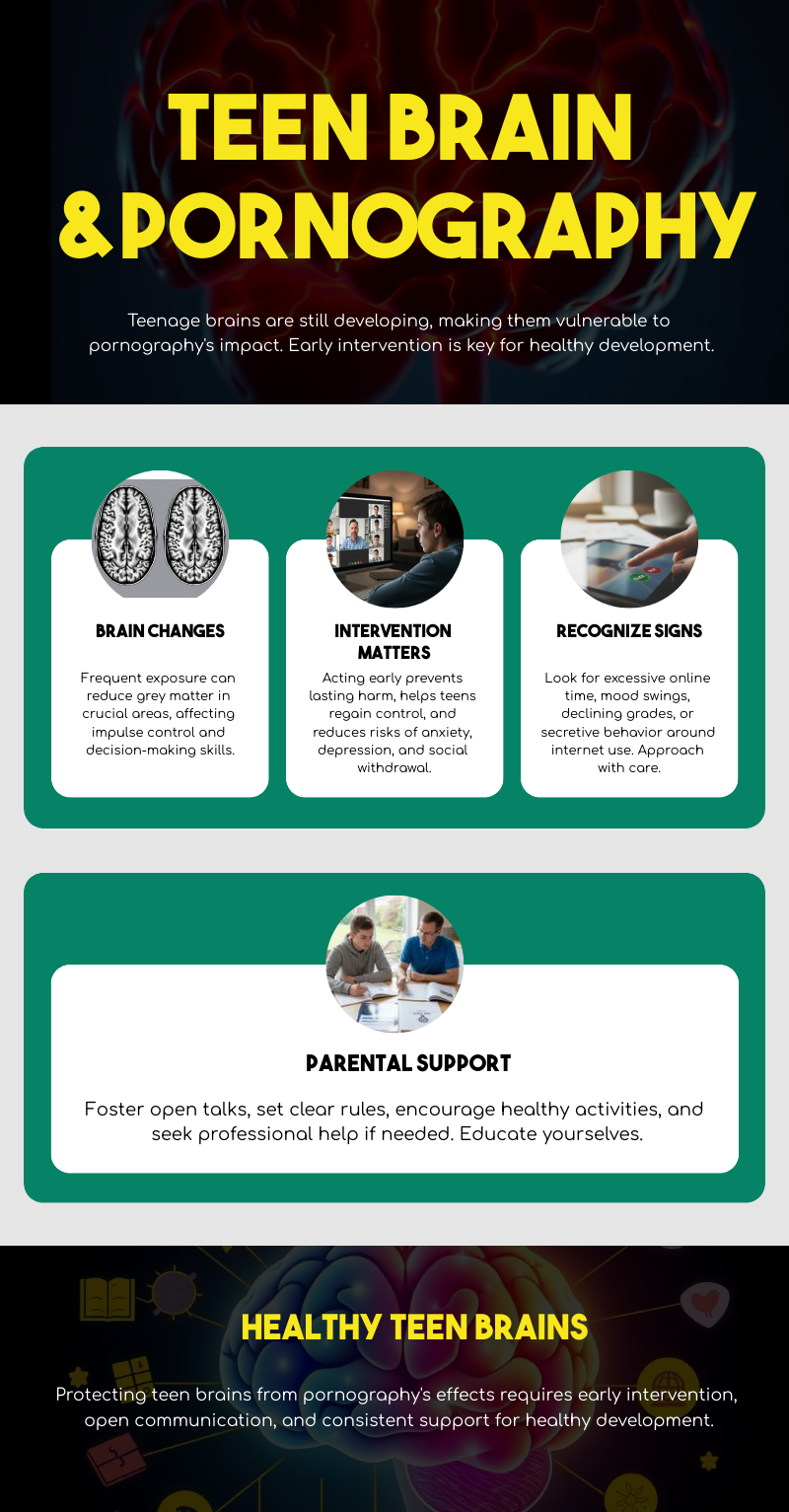
Brain MRI scan showing reduced grey matter in the prefrontal cortex of a teenager’s brain linked to high-frequency pornography use
How Pornography Affects the Teenage Brain
The teenage brain is still developing, especially the prefrontal cortex, which governs impulse control, decision-making, and emotional regulation. MRI studies have shown that teens who frequently use pornography tend to have reduced grey matter in this critical area. Grey matter contains most of the brain’s neurons and is essential for processing information and controlling behavior.
When grey matter decreases in the prefrontal cortex, teens may struggle with:
Controlling impulses and resisting urges
Making thoughtful decisions
Managing emotions effectively
Planning and organizing daily activities
This reduction can make it harder for teens to regulate their behavior, increasing the risk of addiction and other mental health challenges.
Why Early Intervention Is Crucial
Ignoring or minimizing pornography addiction in teens can lead to more pervasive issues over time. The brain’s plasticity means it is highly adaptable during adolescence, but this also means harmful habits can become deeply ingrained if left unchecked.
Early intervention can:
Prevent further brain changes and damage
Help teens regain control over their impulses
Reduce the risk of developing anxiety, depression, or social withdrawal
Support healthier relationships and self-esteem
Waiting too long to address the problem allows addiction to worsen, making recovery more difficult and increasing the chance of lasting negative effects.
Recognizing Signs of Pornography Addiction in Teens
Parents may find it challenging to identify pornography addiction because teens often hide their behavior. Some signs to watch for include:
Spending excessive time online or on devices, especially in private
Avoiding family or social activities
Mood swings, irritability, or anxiety when access is restricted
Declining academic performance or loss of interest in hobbies
Secretive behavior around internet use
If you notice these signs, it’s important to approach the topic with care and understanding rather than judgment.
Practical Steps for Parents to Support Their Teens
Taking action early can make a significant difference. Here are some practical ways parents can help:
Open Honest Conversations
Create a safe space where your teen feels comfortable discussing sensitive topics. Use calm, non-judgmental language to express your concerns and listen actively.
Set Clear Boundaries
Establish rules around internet and device use, including time limits and content restrictions. Use parental controls if necessary but explain why these measures are in place.
Encourage Healthy Activities
Help your teen find fulfilling hobbies, sports, or social groups that provide positive outlets for energy and emotions.
Seek Professional Help
If addiction signs persist or worsen, consult a mental health professional experienced in adolescent addiction. Therapy can provide tailored strategies for recovery.
Educate Yourself and Your Teen
Learn about the effects of pornography on the brain and share age-appropriate information with your teen. Understanding the science behind addiction can motivate change.
Supporting Long-Term Recovery
Recovery from pornography addiction is a process that requires patience and ongoing support. Celebrate small victories and maintain open communication. Encourage your teen to develop skills like mindfulness, stress management, and goal setting to build resilience.
Remember, early intervention not only protects the brain but also helps your teen build a healthier, more balanced life.
Resources for Parents and Teens
If pornography and/or dangerous online sexual behaviors is causing significant distress or interfering with daily life, consider consulting a counselor or therapist experienced in adolescent addiction. Early intervention can prevent long-term problems. If your teen struggles with severe addiction or emotional distress, consider professional help. Therapists specializing in adolescent addiction can provide tailored strategies and counseling. Use the Recovery Toolbox for Teens, a comprehensive, structured program designed to deliver evidence-based treatment while offering meaningful guidance and support for both your adolescent and you as a parent throughout the recovery process.
In cases where serious safety risks or unmanageable behavioral issues are present—such as sexually acting out or having experienced sexual abuse, engagement in high-risk online behaviors, severe mental health crises (including suicidality, self-harm, debilitating anxiety, or depression), or when a teen has become entirely unresponsive to parental authority and the cycle of addictive or compulsive behavior can no longer be safely interrupted within the home environment—an intensive, highly structured therapeutic intervention is often essential. Star Guides Wilderness Therapy provides precisely this level of care: a clinically sophisticated, wilderness-based program specifically designed to stabilize acute risks, restore emotional regulation, and rebuild healthy family dynamics when standard outpatient or home-based approaches are no longer sufficient. This proven next-step intervention offers the containment, expert oversight, and transformative experiences that can mark the turning point toward lasting healing.


Comments