


Understanding the Link Between Feelings of Inadequacy and Pornography Use in Teens

Teen years often feel like a nonstop competition where everyone seems to be winning except your child. Social media platforms like Instagram, TikTok, and X flood teens with carefully curated highlight reels of others’ lives. This constant comparison can leave teens feeling like they don’t measure up. Research shows that teens who frequently compare themselves to others are 60% more likely to experience anxiety and depression. When your teen feels “not smart enough, not attractive enough, not popular enough,” pornography can quietly offer a tempting escape: a brief moment where they feel powerful and wanted.
This post explores how feelings of inadequacy can make teens vulnerable to using pornography as a coping mechanism. It also offers practical ways parents can help their teens build confidence and find healthier ways to manage these difficult emotions.
Why Teens Feel Inadequate in Today’s World
The teenage years are a time of identity-building and self-discovery. But today’s digital environment makes this process more challenging. Teens see endless images and videos showing peers who seem perfect in every way. This creates a comparison trap where teens judge themselves harshly.
Highlight reels vs. reality: Social media rarely shows the struggles behind the scenes.
Peer pressure: Teens want to fit in and be accepted by their friends.
Academic and social expectations: Pressure to succeed in school and social life can feel overwhelming.
When teens internalize these pressures, they may start to believe they are not good enough. This feeling of inadequacy can lead to anxiety, low self-esteem, and a sense of isolation.
How Feelings of Inadequacy Lead to Pornography Use
Pornography can seem like a quick fix for teens struggling with these feelings. It offers an illusion of control, power, and acceptance that they might not feel in real life. Here’s how this connection works:
Escape from negative emotions: Pornography provides a temporary distraction from feelings of failure or loneliness.
Sense of power and control: Teens who feel powerless in social or academic settings may find a false sense of strength through pornography.
Validation and acceptance: Porn can create a feeling of being desired, which counters feelings of rejection or invisibility.
This coping mechanism is risky because it does not address the root causes of inadequacy. Instead, it can create a cycle where teens rely on pornography to feel better, which may lead to addiction and further emotional struggles.

Image caption: A teen alone in their room, reflecting the isolation that can come with feelings of inadequacy and vulnerability.
Signs Your Teen May Be Using Pornography to Cope
Parents often worry but don’t know what signs to look for. Some common indicators include:
Sudden withdrawal from family and friends
Changes in mood, such as irritability or sadness
Secretive behavior around devices and internet use
Decline in academic performance
Loss of interest in hobbies or activities they once enjoyed
If you notice these signs, approach your teen with empathy rather than judgment. Open conversations can help them feel safe to share their struggles.
How Parents Can Help Teens Build Real Confidence
Helping your teen overcome feelings of inadequacy requires patience and support. Here are practical steps parents can take:
Track Real Wins
Encourage your teen to recognize progress, not perfection. For example, if they usually get Cs and now earn a B, celebrate that improvement. This helps shift focus from unrealistic comparisons to personal growth.
Use a journal or app to note daily or weekly achievements.
Praise effort and persistence, not just results.
Help them set small, achievable goals.
Foster Open Communication
Create a safe space where your teen can talk about their feelings without fear of criticism.
Ask open-ended questions about their day and emotions.
Share your own experiences with self-doubt to normalize their feelings.
Listen actively and validate their struggles.
Encourage Healthy Coping Strategies
Help your teen find alternatives to pornography for managing stress and emotions.
Physical activity like sports or walking
Creative outlets such as drawing, writing, or music
Mindfulness practices like meditation or deep breathing
Spending time with supportive friends or family
Limit Exposure to Unrealistic Social Media
Help your teen understand that social media is often a highlight reel, not the full story.
Discuss the difference between online images and real life.
Encourage breaks from social media to reduce comparison.
Follow positive, realistic accounts that promote self-acceptance.
When to Seek Professional Help
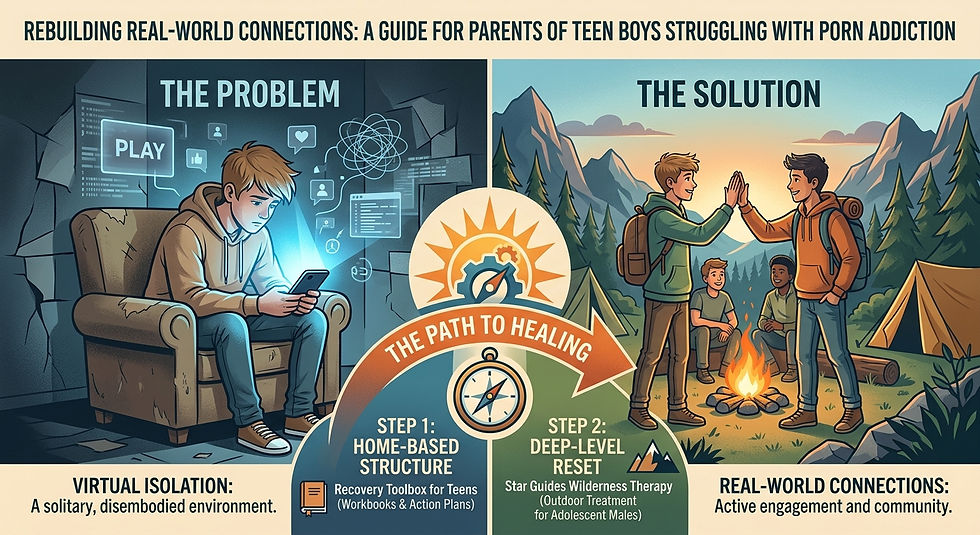
If your teen is grappling with severe pornography or sexual addiction, or experiencing significant emotional distress, seeking professional intervention is a critical step. Specialized therapists in adolescent addiction and compulsive sexual behaviors can offer personalized, evidence-based treatment and counseling tailored to your child’s unique needs. For families ready to engage in a structured, comprehensive recovery process at home, the Recovery Toolbox for Teens provides a proven, step-by-step program that delivers clinical-grade tools, practical strategies, and ongoing parental coaching—empowering both you and your teen to break the cycle of addiction and rebuild trust, accountability, and emotional health together.
When Safety or Stability Is at Risk
In situations involving acute safety concerns—such as sexually acting out, a history of sexual abuse, high-risk online behavior, severe mental health crises (including suicidality, self-harm, profound anxiety, or depression), or when a teen has become unreachable by parental guidance and the addictive cycle can no longer be safely managed at home—more intensive intervention becomes essential. Star Guides Wilderness Therapy is specifically designed for these pivotal moments. This clinically sophisticated, wilderness-based therapeutic program provides immediate stabilization, expert trauma-informed care, and a highly structured environment that restores emotional regulation, interrupts dangerous patterns, and rebuilds healthy family connections. For teens and families at a crossroads, Star Guides has proven to be the transformative turning point that leads to lasting recovery and renewed hope.


Comments