


Breaking Through the Digital Void: Rebuilding Family Connections in a World of Teen Loneliness

Your teenager is not just addicted to their phone or screen or porn. They are escaping a world where they feel invisible, unheard, and disconnected. While you share the same roof, digital dopamine quietly replaces the intimacy your family once had. This modern isolation pushes teens into digital voids where fleeting online rewards take the place of genuine connection. Understanding how loneliness rewires the teenage brain and why digital dopamine feels so addictive can help parents rebuild meaningful family bonds.

How Loneliness Changes the Teenage Brain
Teenagers’ brains are still developing, especially the prefrontal cortex, which controls decision-making, impulse control, and long-term planning. Chronic loneliness rewires this part of the brain to prioritize immediate rewards over long-term stability. When teens feel invisible or disconnected, their brains seek quick dopamine hits from digital sources like social media, video games, or pornography.
This rewiring means teens become more sensitive to instant validation, such as likes or comments, and less motivated by slower, more meaningful interactions like family conversations or shared activities. The brain’s reward system shifts focus from deep connection to rapid, surface-level feedback.
The Chemical Difference Between Digital Validation and Real Connection
A “like” on a social media post or a quick message triggers a small dopamine release, a chemical that makes us feel pleasure and motivates us to seek more of the same. This dopamine hit is fast and fleeting, encouraging repetitive behavior and creating a craving for constant digital stimulation.
In contrast, real-life connection produces oxytocin, often called the “bonding hormone.” Oxytocin surges during eye contact, physical presence, and shared experiences. It promotes trust, reduces stress, and builds long-lasting emotional bonds. Unlike dopamine, oxytocin supports feelings of safety and belonging, which are essential for healthy emotional development.
The problem is that high-speed digital consumption creates a baseline of boredom. After constant rapid stimulation, traditional family interactions feel painfully slow and less rewarding to a teenager’s rewired brain. This makes it harder for parents to engage their teens in meaningful ways.
Why Traditional Family Time Feels Slow and Boring
Digital content is designed to be fast, flashy, and instantly gratifying. Videos, games, and social media updates change every few seconds, flooding the brain with new information and rewards. This rapid pace rewires the brain to expect constant novelty.
Family dinners, conversations, or quiet moments together don’t provide the same immediate rush. They require patience, attention, and emotional effort. For a teenager used to digital dopamine, these slower interactions can feel dull or frustrating.
This mismatch creates a cycle where teens retreat further into their screens, and families grow more disconnected. Parents may feel ignored or powerless, while teens feel misunderstood and isolated.
How to Replace Screen-Time Escapism with Intentional Family Connection
Breaking this cycle requires replacing digital dopamine with high-friction family connection—activities that demand attention, presence, and emotional engagement. Here are practical steps parents can take:
Create tech-free zones and times. Designate certain areas or hours where screens are off-limits. Use this time for shared meals, games, or walks.
Engage in physical activities together. Sports, hiking, or even simple stretching sessions promote oxytocin release through physical presence and shared effort.
Practice eye contact and active listening. When your teen talks, give them your full attention. Look them in the eye, ask questions, and show empathy.
Build rituals that encourage presence. Family traditions like weekly movie nights, cooking together, or storytelling create predictable moments of connection.
Model vulnerability and openness. Share your own feelings and struggles to encourage your teen to open up without judgment.
Limit passive screen time. Encourage activities that require creativity or interaction rather than endless scrolling or binge-watching.
Understanding the Neurobiology of Loneliness to Transform Your Home
Loneliness is not just an emotional state; it physically changes the brain’s wiring. Recognizing this helps parents approach their teens with patience and strategy rather than frustration.
Loneliness increases stress hormones. This makes teens more anxious and less able to regulate emotions.
It reduces motivation for social interaction. Teens may withdraw further, deepening isolation.
It impairs executive function. Decision-making and impulse control weaken, making it harder to resist digital temptations.
By creating a home environment rich in genuine connection, parents can help reverse these effects. A resilient household feels safe, predictable, and emotionally supportive. This environment encourages teens to seek real relationships instead of digital escapes.
Real-Life Examples of Rebuilding Connection
A family that started a weekly “no phone dinner” tradition found their teenager began sharing more about their day and feelings.
Parents who joined their teen in a shared hobby, like cooking or gardening, noticed increased trust and openness.
One mother replaced nightly screen time with a 10-minute “check-in” ritual, asking her teen about highs and lows of the day, which gradually improved communication.
These examples show that rebuilding connection takes time and effort but leads to stronger family bonds and healthier teens.
Resources for Parents and Teens
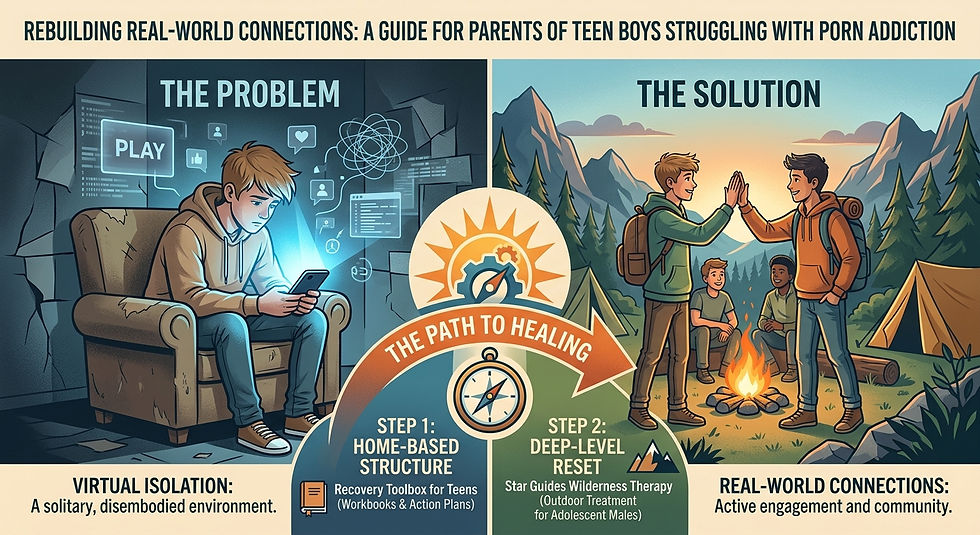
If pornography use is causing significant distress or interfering with daily life, consider consulting a counselor or therapist experienced in adolescent addiction. Early intervention can prevent long-term problems. If your teen struggles with severe addiction or emotional distress, consider professional help. Therapists specializing in adolescent addiction can provide tailored strategies and counseling. Use the Recovery Toolbox for Teens, a comprehensive, structured program designed to deliver evidence-based treatment while offering meaningful guidance and support for both your adolescent and you as a parent throughout the recovery process.
In cases where serious safety risks or unmanageable behavioral issues are present—such as sexually acting out or having experienced sexual abuse, engagement in high-risk online behaviors, severe mental health crises (including suicidality, self-harm, debilitating anxiety, or depression), or when a teen has become entirely unresponsive to parental authority and the cycle of addictive or compulsive behavior can no longer be safely interrupted within the home environment—an intensive, highly structured therapeutic intervention is often essential. Star Guides Wilderness Therapy provides precisely this level of care: a clinically sophisticated, wilderness-based program specifically designed to stabilize acute risks, restore emotional regulation, and rebuild healthy family dynamics when standard outpatient or home-based approaches are no longer sufficient. This proven next-step intervention offers the containment, expert oversight, and transformative experiences that can mark the turning point toward lasting healing.



Comments