


Navigating Pornography Addiction in Teen Boys: Understanding the Spectrum and Finding the Right Path Forward

As a parent of a teenage boy, few challenges feel as isolating or heartbreaking as discovering your son is struggling with pornography. In today's digital world, exposure often begins innocently—through curiosity, peer sharing, or algorithmic rabbit holes—but it can quickly escalate. You're not alone, and there is real hope with compassionate, structured support. This post outlines a clear framework for understanding the degrees of use, from normal curiosity to problematic patterns to full addiction. It also highlights practical first steps and more intensive options when needed.

Understanding the Spectrum of Pornography Use in Teens
Pornography consumption isn't one-size-fits-all. Experts often describe a progression that helps parents assess severity and respond appropriately. Here's a practical delineation based on frequency, control, and impact:
Experimentation/Curiosity (Entry-Level Use):
This is common among teens exploring sexuality. It might involve occasional, accidental, or infrequent viewing (e.g., once or twice out of curiosity or peer influence). At this stage, there's little secrecy, minimal disruption to daily life, and no strong cravings. The teen can usually stop without much struggle. Brain science shows the adolescent brain is highly plastic and vulnerable to dopamine spikes, but early exposure doesn't always lead to problems if addressed openly.
Casual or Habitual Use:
Here, viewing becomes more regular—perhaps weekly or in response to stress, boredom, or triggers like being alone with a device. Teens may hide it somewhat, spend increasing time on it, or notice mild effects like reduced focus on school/hobbies or shifts in expectations about real relationships. Control is still possible with effort, but patterns are forming. Tolerance can begin, where more extreme content is sought for the same "hit." This stage risks escalation without intervention, as habits wire into neural pathways.
Full-Blown Addiction/Compulsive Use:
At this level, use is frequent and compulsive despite clear negative consequences. Signs include:
Inability to stop despite promises or attempts.
-Preoccupation that interferes with school, friendships, sleep, or family life.
-Escalation to more extreme content, secrecy, lying, or risky behaviors (e.g., viewing in unsafe places).
-Emotional symptoms like irritability when access is blocked, withdrawal, anxiety, depression, or desensitization to real intimacy.
-Continued use even when it causes distress or harm.
This isn't about moral failure—it's a brain-based issue involving dopamine desensitization, where natural rewards (sports, connections, achievements) lose appeal. Early intervention prevents deeper entrenchment.
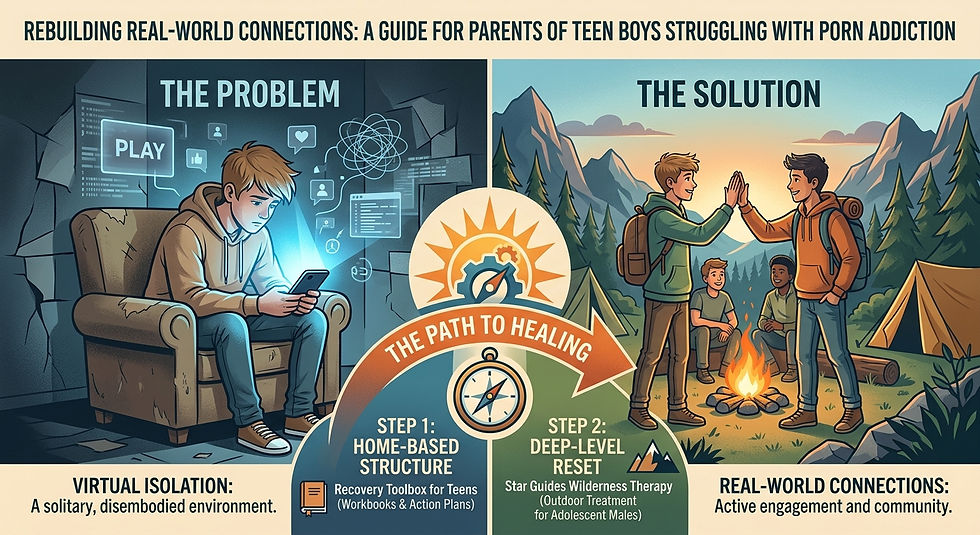
First-Line Intervention: The Recovery Toolbox for Teens
For most families starting out—especially in experimentation through casual or early compulsive stages—The Recovery Toolbox for Teens offers an excellent, accessible at-home starting point.
Created by Therapy Associates, this evidence-based workbook bundle (including the Breaking Free Workbook, 101 Tips for Quitting Porn, and parent guides) provides structured, step-by-step tools tailored for teens and families. It combines practical strategies, emotional support, habit-replacement exercises, relapse prevention, and a compassionate framework to rebuild self-worth and accountability—without shame.
Parents and teens work through it together, fostering open communication. Many families see strong results as a first-level intervention, empowering them to address the issue proactively before it spirals. It's practical, faith-informed in parts where relevant, and designed specifically for adolescent pornography addiction recovery. Visit therapyassociates.net to learn more and get started today.
When More Intensive Support Is Needed: STAR Guides Wilderness Therapy
For higher-risk situations—entrenched addiction, co-occurring issues like technology addiction, trauma, severe withdrawal, family strain, or when home efforts aren't enough—STAR Guides Wilderness Therapy provides specialized, immersive intervention.
This gender-specific program for boys ages 13–17 uses a wilderness therapy model in Utah's healing outdoors. It combines:
-Full digital detox (no tech distractions).
-Individual, family and group therapy.
-Adventure-based challenges that build resilience, emotional regulation, and healthy identity.
-Trauma-informed care focused on compulsive sexual behaviors and pornography addiction.
The immersive environment disrupts destructive cycles, rebuilds family connections through parent involvement, and equips teens with lasting tools. It's clinically supervised and ideal for complex cases needing a powerful reset.
Taking the Next Step as a Parent
-Observe without panic — Track patterns honestly but approach with love.
-Open dialogue — Use "I notice..." conversations focused on support, not punishment.
-Implement boundaries — Device-free zones, accountability software, and shared activities.
-Start with the Toolbox — For structure and momentum.
-Seek professional input — Consult a therapist; escalate to wilderness if red flags persist (e.g., declining grades, isolation, aggression when confronted).
Recovery is possible. Many teens emerge stronger, with healthier brains, restored relationships, and renewed purpose. Your proactive love makes all the difference. If you're in this struggle, reach out to the resources above or a trusted professional. You're doing important work—hang in there.


Comments