


Restoring Intentionality: Helping Teens Overcome porn, social media, gaming and Digital Addiction from Boredom

Boredom used to spark creativity, but for many teens today, it has become a digital trap. Endless scrolling is not about curiosity or interest; it reflects a deeper neurochemical issue where the brain’s natural "fullness" signal fails. This failure leads to a dopamine loop that overrides the brain’s ability to feel satisfied, leaving teens stuck in a cycle of high-arousal boredom. Understanding this biological glitch is key to helping your teen regain control, rebuild intentionality, and break free from digital addiction.

Parent Guide | Helping Your Teen Overcome Pornography Addiction
How Dopamine Loops Override the Brain’s Satiety Signal
Dopamine is a neurotransmitter that plays a crucial role in motivation and reward. When teens engage with digital content, especially infinite scroll platforms, their brains release dopamine in bursts. Normally, dopamine signals satisfaction and helps the brain recognize when to stop seeking more stimulation. However, with constant digital input, this signal becomes disrupted.
Digital satiety failure means the brain no longer registers "enough." Instead of feeling content, teens feel compelled to keep scrolling.
This creates a dopamine loop, where the brain chases the next hit of stimulation without ever feeling fulfilled.
The result is a broken satiety switch that traps teens in a cycle of seeking more digital content to feel normal.
This neurochemical failure explains why teens often say they are bored but cannot stop scrolling. Their brains are stuck in a state of craving, not genuine boredom.
Infinite Scrolls and the Paralysis of the Prefrontal Cortex
The prefrontal cortex is the brain’s control center for decision-making, impulse control, and intentional behavior. When teens use apps designed with infinite scroll, this area becomes overwhelmed and less effective.
Infinite scrolls provide endless content without natural stopping points.
This continuous flow paralyzes the prefrontal cortex, reducing teens’ ability to make conscious choices.
Teens enter a state of high-arousal boredom, where they feel restless but cannot focus or engage in meaningful activities.
This state makes it difficult for them to regulate their emotions or break away from the screen.
By understanding this effect, parents can see why simply telling teens to "stop scrolling" often fails. The brain’s control center is temporarily impaired, making self-regulation challenging.
The Biological Glitch Behind Digital Addiction
This combination of dopamine loop and prefrontal cortex paralysis creates a biological glitch. Teens are caught in a feedback loop where their brain chemistry and cognitive control are compromised.
The glitch makes digital addiction feel involuntary, not just a bad habit.
Teens may want to stop but feel powerless because their brain’s reward and control systems are out of sync.
Recognizing this helps parents approach the issue with empathy and science-based strategies.
This biological perspective shifts the conversation from blame to understanding, opening the door to effective support.
Practical Steps to Restore Internal Regulation and Intentionality
Helping your teen regain control involves rebuilding their brain’s natural regulation and decision-making abilities. Here are practical steps to support this process:
1. Create Structured Screen Time
Set clear limits on daily screen use with consistent routines.
Encourage breaks every 20-30 minutes to reduce dopamine overload.
Use apps or device settings to enforce limits if needed.
2. Encourage Boredom Without Screens
Help teens experience boredom as a natural state, not a trigger for scrolling.
Suggest offline activities like drawing, reading, or journaling.
Model boredom tolerance by sharing your own screen-free moments.
3. Support Mindfulness and Emotional Awareness
Teach simple mindfulness exercises to improve focus and emotional regulation.
Encourage teens to notice their urges to scroll and pause before acting.
Use breathing techniques to reduce restlessness and high-arousal states.
4. Promote Physical Activity and Social Interaction
Physical exercise helps rebalance brain chemistry and improve mood.
Encourage face-to-face time with friends and family to rebuild social skills.
Outdoor activities provide natural dopamine boosts without overstimulation.
5. Collaborate on Digital Detox Plans
Work with your teen to design gradual digital detox periods.
Celebrate small wins and progress to build motivation.
Avoid punishment or shaming; focus on positive reinforcement.
Real-Life Example: Sam’s Journey to Intentionality
Sam, a 15-year-old, spent hours daily scrolling through social media and video platforms. His parents noticed he was irritable and struggled with schoolwork. After learning about the dopamine loop and prefrontal cortex effects, they introduced structured screen time and encouraged offline hobbies like painting and hiking.
Sam also practiced mindfulness with his parents and gradually reduced his screen use. Over several weeks, he reported feeling less restless and more focused. His ability to choose activities intentionally improved, showing how understanding the biological basis helped the whole family support his recovery.
Helping teens overcome digital addiction requires patience and a clear understanding of the brain’s role in this challenge. By isolating the biological glitch of dopamine loops and prefrontal cortex paralysis, parents can provide the right environment and tools to restore their teen’s internal regulation and intentionality.
Resources for Parents and Teens
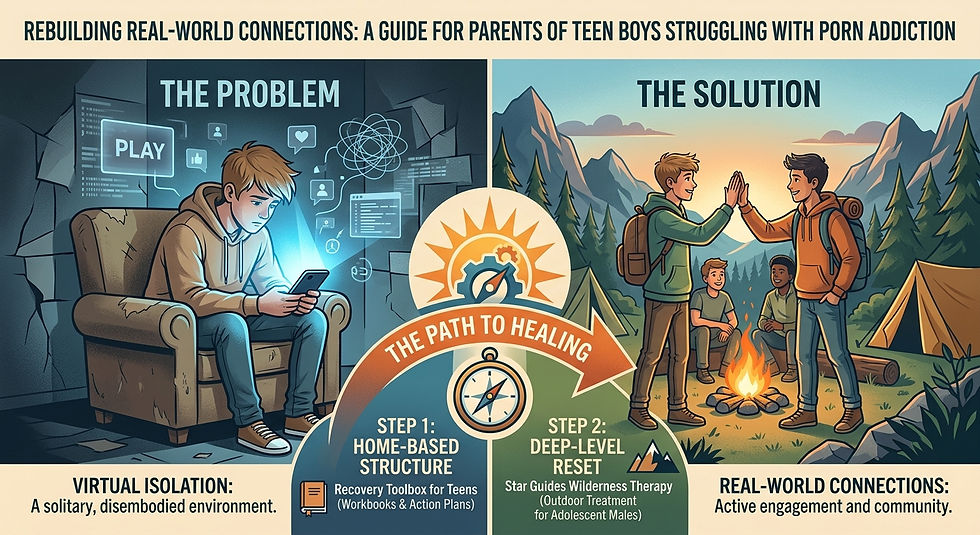
If pornography use is causing significant distress or interfering with daily life, consider consulting a counselor or therapist experienced in adolescent addiction. Early intervention can prevent long-term problems. If your teen struggles with severe addiction or emotional distress, consider professional help. Therapists specializing in adolescent addiction can provide tailored strategies and counseling. Use the Recovery Toolbox for Teens, a comprehensive, structured program designed to deliver evidence-based treatment while offering meaningful guidance and support for both your adolescent and you as a parent throughout the recovery process.
In cases where serious safety risks or unmanageable behavioral issues are present—such as sexually acting out or having experienced sexual abuse, engagement in high-risk online behaviors, severe mental health crises (including suicidality, self-harm, debilitating anxiety, or depression), or when a teen has become entirely unresponsive to parental authority and the cycle of addictive or compulsive behavior can no longer be safely interrupted within the home environment—an intensive, highly structured therapeutic intervention is often essential. Star Guides Wilderness Therapy provides precisely this level of care: a clinically sophisticated, wilderness-based program specifically designed to stabilize acute risks, restore emotional regulation, and rebuild healthy family dynamics when standard outpatient or home-based approaches are no longer sufficient. This proven next-step intervention offers the containment, expert oversight, and transformative experiences that can mark the turning point toward lasting healing.


Comments