


Rewiring Resilience Through Intentional Friction: Strategies to Combat Instant Gratification (especially porn) in Teens

Teens today face a constant barrage of instant digital rewards. Endless scrolling, quick likes, and rapid notifications create a cycle where the brain craves immediate pleasure. This pattern can erode impulse control and weaken mental resilience. What if the key to protecting your teen’s mental health was to make their digital life a little harder? Introducing intentional friction can help shift their brain from passive consumption to active strength by building the biological foundation for delayed gratification.

Understanding the Problem: Instant Gratification Loops
The brain’s reward system relies heavily on dopamine, a chemical released during pleasurable activities. Social media platforms and digital devices are designed to trigger dopamine hits rapidly and repeatedly. For teens, this creates neurological feedback loops where scrolling becomes automatic, and impulse control weakens. Over time, this can lead to difficulties in managing emotions, focusing on long-term goals, and handling stress.
The prefrontal cortex, responsible for decision-making and self-control, struggles to develop fully when constantly overridden by these dopamine-driven impulses. To counter this, teens need to practice delayed gratification—waiting for rewards instead of seeking immediate pleasure. This strengthens their impulse control and builds mental fortitude.
What Is Intentional Friction and Micro-Adversity?
Intentional friction means deliberately adding small obstacles or challenges to everyday activities. These challenges are not meant to frustrate but to encourage patience, problem-solving, and resilience. When teens face manageable difficulties, their brains activate resilience responses, strengthening neural pathways in the prefrontal cortex.
Micro-adversity refers to these small, controlled challenges. Examples include waiting a few extra minutes before accessing a device, completing a simple analog task before screen time, or choosing to engage in activities that require sustained effort rather than instant rewards.
By introducing micro-adversity, parents can help teens break the seamless flow of instant digital access and build the delayed gratification muscle.
How to Build Intentional Friction at Home
Creating intentional friction in your teen’s environment doesn’t require drastic changes. Small adjustments can make a significant difference in rewiring their brain for resilience.
Timed Device Delays
Set up short delays before your teen can unlock their phone or access certain apps. For example, a 30-second timer before the device becomes usable forces a pause. This brief wait interrupts automatic scrolling and encourages mindfulness.
Analog Task Requirements
Require teens to complete a simple physical or mental task before screen time. This could be:
Writing a short journal entry
Doing a few stretches or light exercises
Organizing their study space
These tasks introduce low-stakes discomfort that shifts focus from instant digital rewards to active engagement.
Scheduled Digital Breaks
Encourage regular breaks from screens during the day. Use timers or alarms to signal these breaks, helping teens practice patience and self-regulation.
Device-Free Zones or Times
Designate specific areas or times at home where devices are not allowed. This intentional removal of instant access creates natural friction and encourages alternative activities like reading, hobbies, or family conversations.
Examples of Low-Stakes Discomfort That Build Resilience
Password Delays: Change device passwords daily and share them only after a short wait or task completion.
Physical Distance: Keep devices in a different room, requiring teens to get up and walk to access them.
Manual Controls: Use analog clocks or timers instead of digital ones to build awareness of time passing.
Offline Activities: Encourage puzzles, board games, or crafts that require focus and patience.
These examples introduce small challenges that are easy to manage but effective in strengthening delayed gratification.
The Science Behind Delayed Gratification and Brain Rewiring
Research shows that practicing delayed gratification activates the prefrontal cortex, which governs self-control and decision-making. When teens resist instant rewards, their brains build stronger connections in this area, improving impulse control over time.
Introducing micro-adversity triggers the brain’s resilience response, releasing stress hormones in manageable amounts that promote growth rather than overwhelm. This biological foundation supports long-term behavioral recovery from compulsive digital habits.
Supporting Your Teen Through the Process
Change can be uncomfortable, especially when it involves breaking familiar habits. Support your teen by:
Explaining the purpose of intentional friction and how it helps their brain
Setting clear, consistent boundaries around device use
Celebrating small wins and progress in patience and self-control
Modeling delayed gratification in your own behavior
Encourage open conversations about challenges and feelings during this adjustment period.
Building mental resilience in teens requires more than just limiting screen time. By introducing intentional friction and micro-adversity, parents can help teens develop the biological foundation necessary to resist instant gratification loops. These small, manageable challenges strengthen impulse control and shift the brain from passive consumption to active strength.
Resources for Parents and Teens
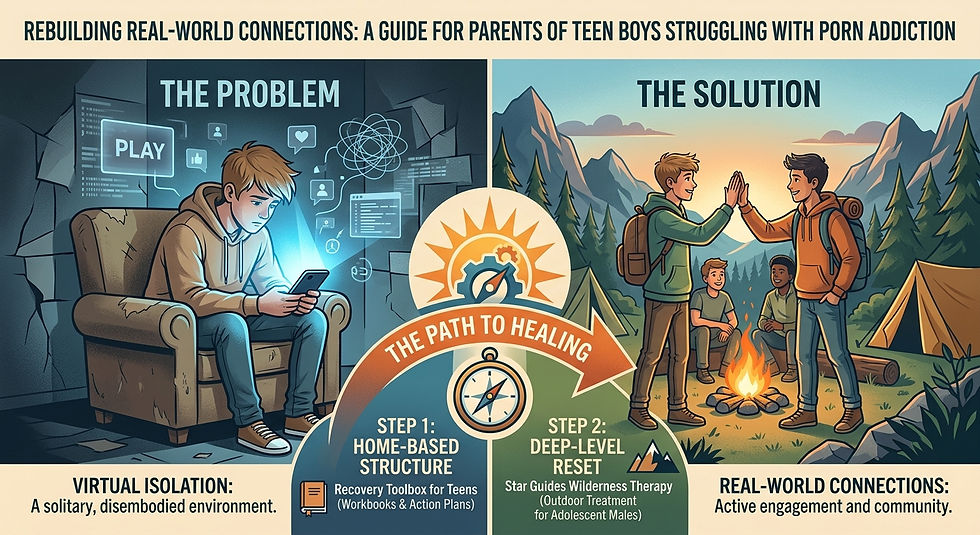
If pornography use is causing significant distress or interfering with daily life, consider consulting a counselor or therapist experienced in adolescent addiction. Early intervention can prevent long-term problems. If your teen struggles with severe addiction or emotional distress, consider professional help. Therapists specializing in adolescent addiction can provide tailored strategies and counseling. Use the Recovery Toolbox for Teens, a comprehensive, structured program designed to deliver evidence-based treatment while offering meaningful guidance and support for both your adolescent and you as a parent throughout the recovery process.
In cases where serious safety risks or unmanageable behavioral issues are present—such as sexually acting out or having experienced sexual abuse, engagement in high-risk online behaviors, severe mental health crises (including suicidality, self-harm, debilitating anxiety, or depression), or when a teen has become entirely unresponsive to parental authority and the cycle of addictive or compulsive behavior can no longer be safely interrupted within the home environment—an intensive, highly structured therapeutic intervention is often essential. Star Guides Wilderness Therapy provides precisely this level of care: a clinically sophisticated, wilderness-based program specifically designed to stabilize acute risks, restore emotional regulation, and rebuild healthy family dynamics when standard outpatient or home-based approaches are no longer sufficient. This proven next-step intervention offers the containment, expert oversight, and transformative experiences that can mark the turning point toward lasting healing.



Comments