


Understanding Online Grooming: Data and Research for Parents on Teen Safety Amid Popular Platforms
- Matt Bulkley

- Jan 12
- 5 min read
Online grooming is a serious and growing concern for parents today. As teenagers spend more time on the internet, they face risks from individuals who seek to exploit them through manipulation and deceit. Understanding how grooming happens, where it occurs, and what research reveals about this threat can help parents protect their children effectively. This post provides clear, research-backed information about online grooming, focusing on the platforms where it most often takes place and practical steps parents can take to keep teens safe.

What Is Online Grooming and Why It Matters
Online grooming involves an adult building a relationship with a minor through digital communication to gain their trust for the purpose of sexual abuse or exploitation. Groomers often use social media, chat apps, and gaming platforms to contact teens. They may pretend to be peers or use fake profiles to appear trustworthy.
Research from the UK’s National Society for the Prevention of Cruelty to Children (NSPCC) found that 1 in 5 children aged 11 to 16 had been contacted by an adult online with the intention of meeting them in person. The U.S. Department of Justice reports similar trends, highlighting that grooming often leads to offline abuse.
The impact on teens can be devastating, including emotional trauma, exploitation, and long-term psychological harm. Parents need to understand the warning signs and the environments where grooming is most likely to happen.
How Grooming Happens: The Process and Tactics
Groomers use a step-by-step approach to manipulate teens:
Targeting: They identify vulnerable teens, often those seeking friendship or support.
Building Trust: Groomers spend weeks or months chatting, sharing interests, and offering compliments.
Isolation: They encourage secrecy and discourage teens from telling others about their conversations.
Exploitation: Once trust is established, groomers may ask for explicit images, arrange meetings, or coerce teens into harmful activities.
Studies show groomers often use emotional manipulation, such as pretending to understand the teen’s problems or offering gifts. They exploit teens’ natural desire for connection and acceptance.
Popular Websites and Social Media Platforms Where Grooming Occurs
Certain platforms are more commonly used by groomers due to their popularity among teens and the ease of private communication. According to a 2023 report by the Internet Watch Foundation (IWF) and the National Center for Missing & Exploited Children (NCMEC), the following platforms are frequently involved in grooming cases:
TikTok: With its large teen user base, TikTok’s direct messaging and live streams can be exploited by groomers.
Instagram: Private messages and stories allow groomers to contact teens discreetly.
Snapchat: The app’s disappearing messages and multimedia features make it attractive for secretive conversations.
Discord: Originally for gamers, Discord’s chat servers and private messaging provide groomers with multiple ways to engage teens.
Online Gaming Platforms: Games like Fortnite and Roblox have chat functions where groomers can initiate contact.
The report found that groomers often create fake profiles or impersonate other teens to gain access. They also use group chats and forums to find potential victims.
Data on Grooming Incidents and Trends
Recent data highlights the scale and nature of online grooming:
The National Society for the Prevention of Cruelty to Children (NSPCC) reported a 30% increase in grooming-related helpline contacts between 2019 and 2022.
The Internet Watch Foundation (IWF) removed over 200,000 pieces of child sexual abuse content in 2023, many linked to grooming.
A study published in the Journal of Adolescent Health found that teens who spend more than 3 hours daily on social media are twice as likely to be targeted by groomers.
Research from the European Union Agency for Fundamental Rights shows that grooming is more common among teens who experience social isolation or bullying.
These numbers show grooming is not rare and often targets vulnerable teens. Awareness and prevention are critical.
Signs Parents Should Watch For
Parents can look for behavioral and digital signs that may indicate grooming:
Sudden secrecy about online activities or new devices.
Receiving gifts or money from unknown sources.
Changes in mood, such as anxiety or depression.
Avoiding family or friends and spending excessive time online.
Receiving messages from unknown adults or new “friends” online.
Deleting messages or apps quickly when asked about them.
Open communication is key. Teens who feel safe discussing their online lives are less likely to fall victim.
How Parents Can Protect Teens
Parents can take practical steps to reduce the risk of grooming:
Educate Teens: Talk openly about online risks and the tactics groomers use.
Set Boundaries: Establish rules about screen time, friend requests, and sharing personal information.
Use Privacy Settings: Help teens adjust settings on social media to limit who can contact them.
Monitor Online Activity: Use parental controls and check devices regularly, but balance this with respect for privacy.
Encourage Reporting: Teach teens how to block and report suspicious users on platforms.
Stay Informed: Keep up with changes in popular apps and new online trends.
Experts recommend parents approach these conversations without judgment to build trust.
Resources and Support for Parents and Teens
Several organizations provide support and information:
National Society for the Prevention of Cruelty to Children (NSPCC) offers guides and helplines.
National Center for Missing & Exploited Children (NCMEC) provides resources on online safety.
Internet Watch Foundation (IWF) works to remove harmful content and educate the public.
Many social media platforms have safety centers with advice for parents and teens.
If grooming is suspected, contacting local law enforcement or child protection services is essential.
Seek professional help if needed
If your teen has been a victim of online grooming or sexual exploitation, you already know how heartbreaking, frightening, and overwhelming this experience can be—for them and for you as a parent. The secrecy, the manipulation, the shame they carry (and often try to hide), and the addictive patterns that can develop afterward can leave families feeling lost and powerless. The good news is that specialized help exists, and with the right support, many teens and their families do find a path to healing, safety, and renewed connection.
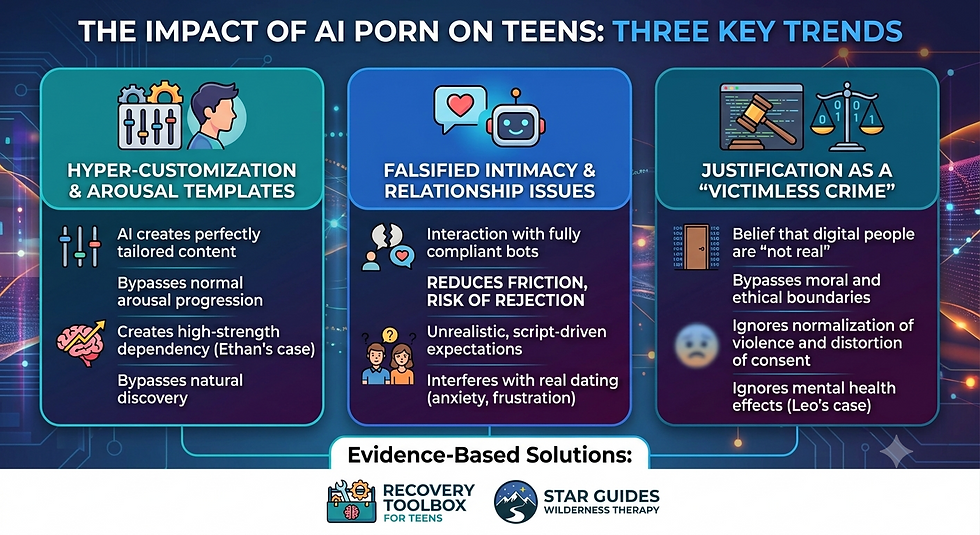
Therapists specially trained in adolescent trauma, online exploitation, and the compulsive behaviors that can follow grooming can guide both your teen and you through recovery. These professionals understand the unique ways digital exploitation impacts developing brains and family dynamics. They help teens process what happened, rebuild trust in themselves and others, and develop healthier coping strategies—while equipping parents with tools to respond with compassion, set appropriate boundaries, and support real change. If your teen has developed an addiction to pornography, then the Recovery Toolbox for Teens can be an invaluable tool in their recovery journey.
When the situation feels especially urgent or unsafe—such as ongoing risky online or sexual behaviors, severe depression, anxiety, self-harm, suicidal thoughts, or when the addictive cycle simply can’t be interrupted at home despite everyone’s best efforts—a more intensive, structured level of care may be the most loving and effective next step. Programs like Star Guides Wilderness Therapy are designed specifically for teens facing these serious challenges. In a safe, digital-free outdoor environment, highly trained staff help teens process deep trauma, break harmful patterns, build self-worth, and develop real-life coping skills—away from triggers and constant online access. Many parents report that this immersive experience gives their teen the reset they desperately need, while providing the family with a clearer path forward.


Comments