


Understanding the Link Between Gaming and Pornography Addiction in Teens

Why does a gaming marathon often lead to an obsession with high-intensity adult content? It all comes down to neurochemistry. Hyper-stimulating game mechanics create a physiological craving that everyday life cannot satisfy. This craving can push teens from harmless gaming into compulsive adult media consumption. Understanding this biological connection is the first step parents can take to help their teens reclaim healthy cognitive boundaries.

How Gaming Primes the Brain for Escalating Dopamine Hits
Video games, especially competitive and fast-paced ones, use rapid reward loops to keep players engaged. These loops trigger bursts of dopamine, a brain chemical linked to pleasure and motivation. For teens, whose brains are still developing, these dopamine hits can be especially powerful.
The problem starts when these bursts become the brain’s new normal. The adolescent brain adapts by needing stronger or more frequent stimulation to feel the same level of reward. This process is called dopamine desensitization. When traditional gaming no longer delivers the same excitement, teens may seek other sources that provide even higher dopamine surges.
The Escalation Ladder from Gaming to Adult Content
As dopamine sensitivity decreases, the brain looks for more intense stimuli. This is where the shift from interactive gaming to passive, high-novelty adult content often begins. Adult platforms use an "infinite scroll" design, similar to modern competitive games’ reward schedules, to keep users hooked.
This endless stream of new content delivers constant novelty, which floods the brain with dopamine. Unlike gaming, which requires active participation, adult content consumption is passive but highly stimulating. This makes it a tempting next step for teens whose brains crave stronger dopamine hits.
Parents should understand this physiological bridge where gaming loops fail to satisfy and lead to compulsive adult media use. Recognizing this pattern helps families address the root cause rather than just the symptoms.
How to Reclaim the Brain’s Reward System
Resetting the brain’s dopamine sensitivity is possible but requires deliberate effort. One effective method is a dopamine fast, which means reducing or eliminating high-stimulation activities for a period. This allows the brain to recover and regain sensitivity to everyday pleasures.
Parents can support their teens by introducing friction-based boundaries that slow down the consumption cycle. Examples include:
Setting strict time limits on gaming and screen use
Removing devices from bedrooms at night
Encouraging breaks during gaming sessions
Using apps that limit access to adult content
These boundaries create natural pauses that reduce dopamine overload and help the brain reset.
Building Healthy, Low-Dopamine Activities
Replacing high-intensity loops with meaningful, low-dopamine activities supports long-term cognitive health. These activities provide steady, sustainable rewards without overwhelming the brain’s chemistry. Suggestions include:
Outdoor exercise like walking, biking, or team sports
Creative hobbies such as drawing, music, or writing
Social activities with friends and family
Mindfulness practices like meditation or yoga
These alternatives help teens rebuild healthy dopamine pathways and find pleasure in real-life achievements.
Resources for Parents and Teens
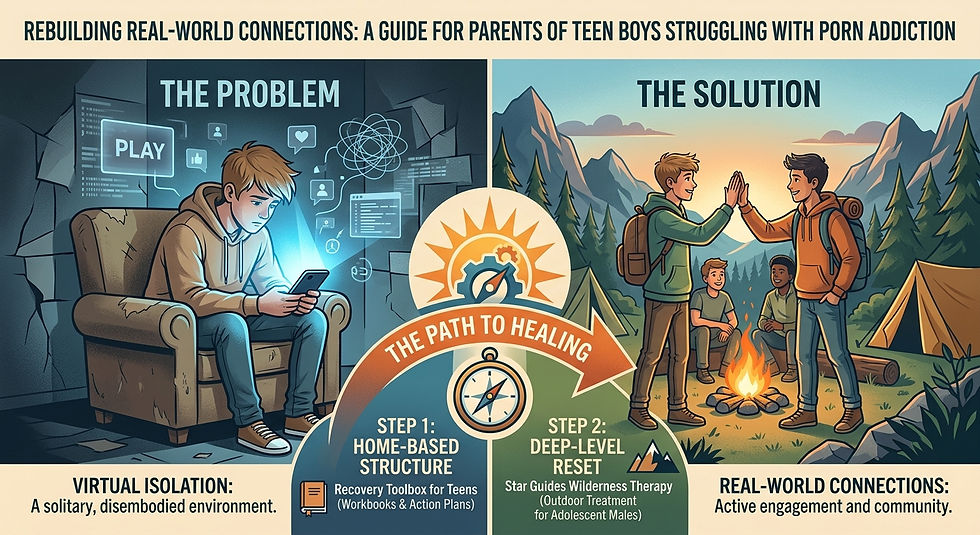
If pornography and/or dangerous online sexual behaviors is causing significant distress or interfering with daily life, consider consulting a counselor or therapist experienced in adolescent addiction. Early intervention can prevent long-term problems. If your teen struggles with severe addiction or emotional distress, consider professional help. Therapists specializing in adolescent addiction can provide tailored strategies and counseling. Use the Recovery Toolbox for Teens, a comprehensive, structured program designed to deliver evidence-based treatment while offering meaningful guidance and support for both your adolescent and you as a parent throughout the recovery process.
In cases where serious safety risks or unmanageable behavioral issues are present—such as sexually acting out or having experienced sexual abuse, engagement in high-risk online behaviors, severe mental health crises (including suicidality, self-harm, debilitating anxiety, or depression), or when a teen has become entirely unresponsive to parental authority and the cycle of addictive or compulsive behavior can no longer be safely interrupted within the home environment—an intensive, highly structured therapeutic intervention is often essential. Star Guides Wilderness Therapy provides precisely this level of care: a clinically sophisticated, wilderness-based program specifically designed to stabilize acute risks, restore emotional regulation, and rebuild healthy family dynamics when standard outpatient or home-based approaches are no longer sufficient. This proven next-step intervention offers the containment, expert oversight, and transformative experiences that can mark the turning point toward lasting healing.



Comments