


When Teen Porn Use Crosses the Line into Dangerous Sexual Acting Out
- Matt Bulkley

- Jan 19
- 4 min read
Teenagers today have unprecedented access to online content, including pornography. While many teens may explore sexual content out of curiosity, some cases show this behavior turning into harmful actions. Parents need to understand when teen porn use moves beyond private exploration and becomes a sign of deeper issues that could lead to dangerous sexual acting out. Two concerning scenarios include teens abusing younger siblings or vulnerable children, and teens seeking sexual activity online, which increases their risk of exploitation.
Understanding these patterns helps parents recognize warning signs early and take steps to protect their children and others.

How Teen Porn Use Can Lead to Sexual Acting Out
Pornography consumption alone does not always indicate a problem. Many teens encounter sexual content as part of normal development. However, when porn use becomes excessive or is combined with risky behavior, it can signal trouble.
Sexual acting out means engaging in sexual behaviors that are inappropriate, harmful, or illegal. This can include:
Sexual abuse of younger siblings or other children
Seeking sexual encounters online with strangers
Engaging in risky sexual activities without understanding consequences
These behaviors often stem from confusion about boundaries, poor impulse control, or exposure to unhealthy sexual messages.
Scenario 1: Sexual Abuse of Younger Siblings or Vulnerable Children
One of the most alarming signs that teen porn use has crossed a line is when a teen begins to act out sexually within the family or community. This can include inappropriate touching, coercion, or abuse of younger siblings or other children.
Why This Happens
Modeling from Pornography: Some teens imitate what they see in porn without understanding consent or age-appropriate behavior.
Lack of Supervision: Teens left unsupervised may experiment without guidance.
Emotional or Psychological Issues: Trauma, neglect, or mental health problems can increase risk.
Power and Control: Some teens use sexual behavior to exert control or express anger.
Warning Signs for Parents
Sudden secrecy or withdrawal from family activities
Younger children showing fear or reluctance around the teen
Changes in younger siblings’ behavior, such as anxiety or regression
Discovery of inappropriate messages, images, or videos involving minors
Aggressive or controlling behavior by the teen
What Parents Can Do
Keep open communication about healthy boundaries and respect
Monitor interactions between siblings and other children
Seek professional help immediately if abuse is suspected
Educate teens about consent and legal consequences
Create a safe environment where children feel comfortable reporting concerns
Scenario 2: Teens Seeking Sexual Activity Online
Another risk is when teens use pornography as a gateway to seek sexual encounters online. This behavior exposes them to predators, exploitation, and emotional harm.
How This Develops
Curiosity and Peer Pressure: Teens may feel pressure to engage in sexting or online sexual chats.
Desire for Validation: Some seek attention or affirmation through sexual interactions.
Lack of Awareness: Teens often underestimate risks of sharing images or meeting strangers.
Addiction or Compulsion: Excessive porn use can lead to compulsive sexual behavior.
Risks Involved
Sexual exploitation or grooming by adults
Blackmail or harassment through shared images
Emotional trauma from unhealthy relationships
Legal consequences for sharing explicit material
Signs to Watch For
Secretive phone or computer use, especially late at night
Receiving or sending explicit messages or images
Sudden changes in mood or behavior after online activity
Avoiding family or friends to spend more time online
New contacts or friends unknown to parents
How Parents Can Protect Teens
Set clear rules about internet use and privacy
Use parental controls and monitoring tools responsibly
Talk openly about online safety and risks of sexting
Encourage healthy self-esteem and offline social activities
Seek counseling if compulsive or risky behavior appears
Supporting Teens Through Healthy Sexual Development
Parents play a crucial role in guiding teens through their sexual development. This includes providing accurate information, setting boundaries, and fostering trust.
Tips for Parents
Start conversations early about bodies, consent, and respect
Use age-appropriate language and be honest
Encourage questions and listen without judgment
Discuss the difference between fantasy and reality in porn
Promote healthy relationships and emotional intelligence
When to Seek Professional Help
If a teen shows signs of sexual acting out, abuse, or exploitation, professional support is essential. This may include:
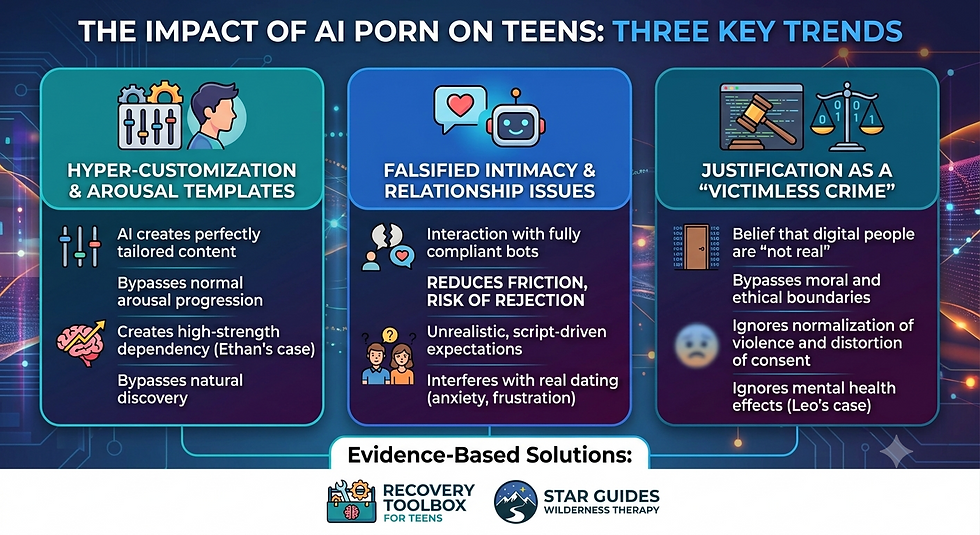
Therapists or counselors experienced in trauma, sexual abuse, addiction and digital issues can provide valuable support. Therapists trained in adolescent development can provide tailored support for teens struggling with pornography use and sexual acting out. Seek professional help if needed: Therapists trained in adolescent addiction can guide both teens and parents through recovery. Utilize the Recovery Toolbox for Teens for a structured approach to the treatment that provides support for both your teen and you as a parent.
When significant safety risks or behavioral concerns are present—such as sexual acting out, sexual abuse, dangerous online activity, severe mental health challenges (including suicidality, self-harm, anxiety, or depression), or when a teenager has become unresponsive to parental guidance and the addictive cycle can no longer be interrupted in the home environment—an intensive, structured intervention like Star Guides Wilderness Therapy may be the most appropriate and effective next step.
Early intervention can prevent harm and help teens develop healthier coping skills.


Comments