


Understanding Pornsexuality: A Guide for Parents of Teens Battling Pornography Addiction
- Matt Bulkley

- Feb 6
- 5 min read
Pornography addiction among teens is a growing concern for many parents. Beyond the immediate challenges of managing screen time or addressing behavioral changes, a deeper trend is emerging that parents need to understand. Some teens are not just struggling with addiction but are identifying with a concept called pornsexuality or solosexuality. This describes individuals who choose pornography and masturbation as their primary form of sexual stimulation and connection, often avoiding real human relationships altogether.
This post will explore what pornsexuality means, why it matters for teens battling pornography addiction, and how parents can support their children through this complex issue. We will use a case scenario and research to provide clarity and practical guidance.

What Is Pornsexuality or Solosexuality?
Pornsexuality, also called solosexuality, is a term used to describe people who prefer pornography and masturbation as their main or exclusive form of sexual expression. Unlike traditional sexual orientations that focus on attraction to other people, pornsexual individuals find sexual satisfaction primarily through solo activities involving pornography.
This trend is becoming more visible among teens and young adults who may feel overwhelmed by social pressures, anxiety, or past trauma. Instead of seeking intimate relationships, they turn to pornography as a safer, more controllable way to experience sexual pleasure.
Key Characteristics of Pornsexuality
Preference for solo sexual activity over partnered sex
Use of pornography as the main source of sexual stimulation
Avoidance or disinterest in real-life romantic or sexual relationships
Possible feelings of comfort and control when engaging with pornography
Sometimes linked with social anxiety, depression, or past negative experiences with relationships
Case Scenario: Jake’s Story
Jake is a 17-year-old high school student whose parents noticed he became increasingly withdrawn over the past year. He spends most of his free time alone in his room, often late at night. His grades have slipped, and he avoids social events. When his parents tried to talk about his behavior, Jake became defensive and distant.
After some research and a sensitive conversation, Jake revealed he spends hours daily watching pornography and masturbating. He said he feels more comfortable with porn than with real people because it doesn’t involve rejection or complicated emotions. Jake identifies with the idea of being "pornsexual," explaining that he doesn’t want to pursue real relationships right now.
Jake’s story highlights how pornography addiction can intertwine with a preference for solosexuality, creating a cycle that isolates teens further.
Why Are Teens Turning to Pornosexuality?
Several factors contribute to why some teens develop a pornsexual identity or preference:
1. Social Anxiety and Fear of Rejection
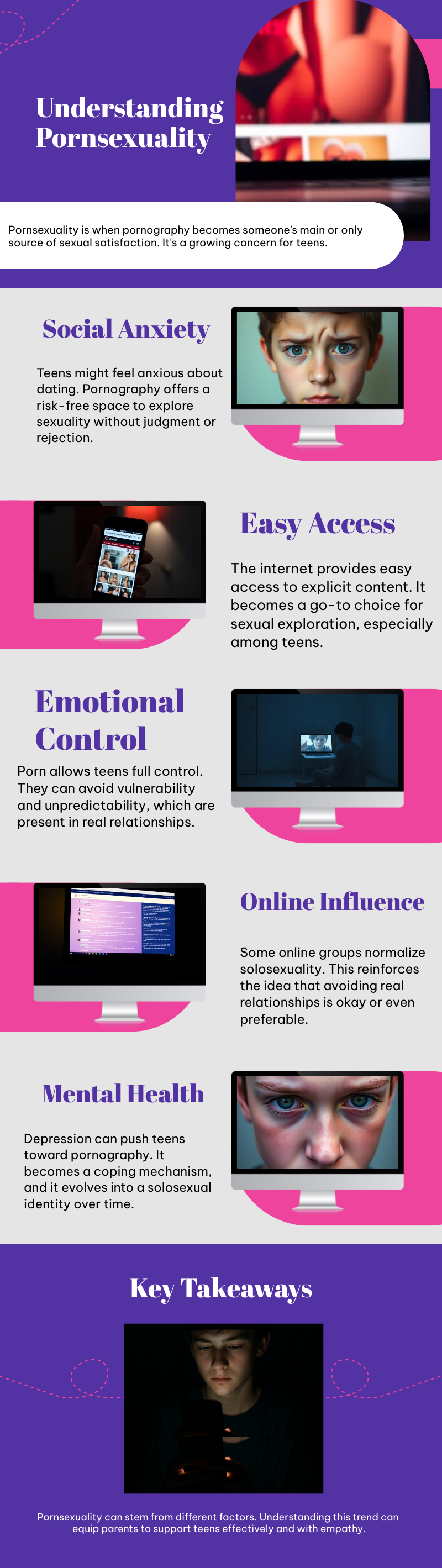
Many teens experience anxiety about dating or forming relationships. Pornography offers a risk-free way to explore sexuality without fear of judgment or rejection.
2. Easy Access to Pornography
The internet provides instant access to vast amounts of explicit content. This availability can make pornography a default choice for sexual exploration.
3. Emotional Safety and Control
Porn allows teens to control their sexual experiences completely. They can avoid vulnerability, emotional complexity, and the unpredictability of real relationships.
4. Influence of Online Communities
Some online groups normalize or even celebrate solosexuality, reinforcing the idea that avoiding real relationships is acceptable or preferable.
5. Underlying Mental Health Issues
Depression, loneliness, or trauma can push teens toward pornography as a coping mechanism, which may evolve into a solosexual identity.
Research Insights on Pornosexuality and Addiction
Research on pornography addiction and solosexuality is still emerging, but some studies offer useful insights:
A 2021 study in the Journal of Behavioral Addictions found that excessive pornography use can lead to social withdrawal and decreased interest in partnered sex.
Surveys show that teens with high pornography consumption report higher levels of loneliness and social anxiety.
Experts suggest that solosexuality may be a coping strategy rather than a fixed sexual orientation, meaning it can change with support and therapy.
Cognitive-behavioral therapy (CBT) and family counseling have shown promise in helping teens reduce pornography use and rebuild social connections.
How Parents Can Support Teens Facing Pornosexuality and Porn Addiction
Supporting a teen struggling with pornography addiction and pornsexuality requires patience, understanding, and practical steps.
1. Open Non-Judgmental Communication
Create a safe space where your teen feels comfortable sharing their feelings without fear of punishment or shame. Use phrases like:
“I’m here to listen and support you.”
“It’s okay to talk about difficult things.”
2. Educate Yourself and Your Teen
Learn about pornography addiction and solosexuality to understand what your teen is experiencing. Share age-appropriate resources that explain healthy sexuality and relationships.
3. Set Healthy Boundaries Around Technology
Work together to establish reasonable limits on screen time and internet use. Encourage activities that promote social interaction and physical exercise.
4. Encourage Professional Help
If addiction or emotional issues are severe, seek help from a therapist experienced in adolescent sexual health and addiction. Family therapy can also improve communication and support.
5. Promote Social Skills and Confidence
Help your teen build social skills through clubs, sports, or hobbies. Positive social experiences can reduce reliance on pornography for connection.
6. Be Patient and Consistent
Recovery and change take time. Celebrate small victories and maintain a supportive attitude even when setbacks occur.
Signs Parents Should Watch For
Parents should be alert to signs that may indicate pornography addiction or solosexual tendencies:
Withdrawal from family and friends
Declining academic performance
Secretive behavior around devices
Emotional numbness or mood swings
Expressing disinterest in dating or relationships
Spending excessive time alone in their room
Early recognition allows for timely intervention and support.
Moving Forward: Helping Teens Reconnect
Helping teens move beyond pornography as their primary sexual outlet involves rebuilding trust, social skills, and emotional resilience. Parents can:
Encourage open discussions about feelings and relationships
Support involvement in group activities that foster connection
Model healthy relationships and communication
Reinforce the value of real human connection alongside healthy sexuality
Sexuality is a complex part of teen development. When pornography becomes the main source of sexual expression, it can create challenges that affect mental health and social growth. Understanding pornsexuality helps parents recognize this trend and respond with empathy and practical support.
If your teen is struggling, remember that change is possible. With the right guidance, teens can learn to balance their sexuality with meaningful relationships and healthier habits.
Seek professional help when needed
If pornography use is causing significant distress or interfering with daily life, consider consulting a counselor or therapist experienced in adolescent addiction. Early intervention can prevent long-term problems. If your teen struggles with severe addiction or emotional distress, consider professional help. Therapists specializing in adolescent addiction can provide tailored strategies and counseling. Use the Recovery Toolbox for Teens, a comprehensive, structured program designed to deliver evidence-based treatment while offering meaningful guidance and support for both your adolescent and you as a parent throughout the recovery process.
In cases where serious safety risks or unmanageable behavioral issues are present—such as sexually acting out or having experienced sexual abuse, engagement in high-risk online behaviors, severe mental health crises (including suicidality, self-harm, debilitating anxiety, or depression), or when a teen has become entirely unresponsive to parental authority and the cycle of addictive or compulsive behavior can no longer be safely interrupted within the home environment—an intensive, highly structured therapeutic intervention is often essential. Star Guides Wilderness Therapy provides precisely this level of care: a clinically sophisticated, wilderness-based program specifically designed to stabilize acute risks, restore emotional regulation, and rebuild healthy family dynamics when standard outpatient or home-based approaches are no longer sufficient. This proven next-step intervention offers the containment, expert oversight, and transformative experiences that can mark the turning point toward lasting healing.


Comments